
Friday, August 14, 2026
Best Behavioral Health EHRs for Growing Group Practices in 2026
Behavioral health group practices evaluating an EHR in 2026 have more viable options than they did five years ago. Most platforms now cover the same baseline: scheduling, clinical documentation, telehealth, outcome measurement, and billing. The differences appear in how quickly a practice can start using the system and how much of it the practice can change afterward.
What criteria we used to compare
We compared five behavioral health EHRs on six criteria, weighted by how much each one affects a growing group practice. The weight for each criterion is listed below and carried through the comparison table.
Growth-related factors
- Ready out of the box, 10% — how much of the practice is operational on the first day, including onboarding time before clinicians are seeing patients.
- Building off the flexibility for growth, 25% — as a practice grows, workflows specific to the practice appear. This covers whether the practice can build and change those workflows itself, and how long each change takes.
Behavioral health factors
- Telehealth integration, 10% — the EHR either brings its own video or works with what the practice already runs. That choice decides how large a group session can get, if it can split into smaller rooms, and where the note and claim land afterward.
- Documentation tools, 10% — note formats, templates, and forms built for behavioral health, covering intake, session notes, treatment plans, and instruments such as PHQ-9 and GAD-7.
- Billing and RCM, 25% — eligibility checks, claim creation and submission, ERA posting, and the reporting a practice needs for session-based and insurance billing.
- AI nativity, 20% — whether AI is a feature attached to the record or part of the platform architecture, operating across the chart and the workflows around it.
The best Behavioral Health EHRs
The table below compares the five platforms across the six criteria.
| Platform | Ready out of the box (10%) | Flexibility for growth (25%) | Telehealth integration (10%) | Documentation tools (10%) | Billing and RCM (25%) | AI nativity (20%) |
|---|---|---|---|---|---|---|
| Avon Health | Days; behavioral health workflows configured on day one | Forms, templates, automations, and workflows changed by the practice, plus SDKs, webhooks, and APIs | Zoom, Google Meet, or Doxy.me launched from Avon scheduling. Group size and breakout structure set by the practice’s own plan. | Configurable note templates and forms, with AI-drafted session notes | Eligibility checks, claims, and revenue cycle management in the platform | AI-native. Agents run the repetitive chart and billing work. |
| SimplePractice | Days | Built-in settings and templates | Group sessions cap at 15 clients, on Plus or $20 per clinician | Therapy note templates and scored measures | Insurance billing and claims in-platform | AI Note Taker, a feature alongside the record |
| Healthie | Weeks | High, primarily through APIs and developer work | Healthie’s own video, with group charting notes for couples, families, and support groups. | Customizable charting templates and forms library | CMS-1500 claims, with RCM through partners | AI Scribe, a feature alongside the record |
| Canvas Medical | Weeks to months | Very high, through the SDK and code | Assembled through integrations, configured by developers. | Narrative charting with coded templates | Claims, coding queues, and ERA posting end to end | AI plugins and agents, built by your developers |
| TherapyNotes | Days | Template-level changes | TherapyNotes’ own video, with group appointments. | Therapy-specific note formats and treatment plans | Integrated claims and ERA posting | Scribe, a feature alongside the record |
A note on sources: everything stated here about platforms other than Avon comes from publicly available information — vendor websites, product pages, documentation, and release notes — and reflects what those sources described as of July 2026.
A closer look at each
1. Avon Health
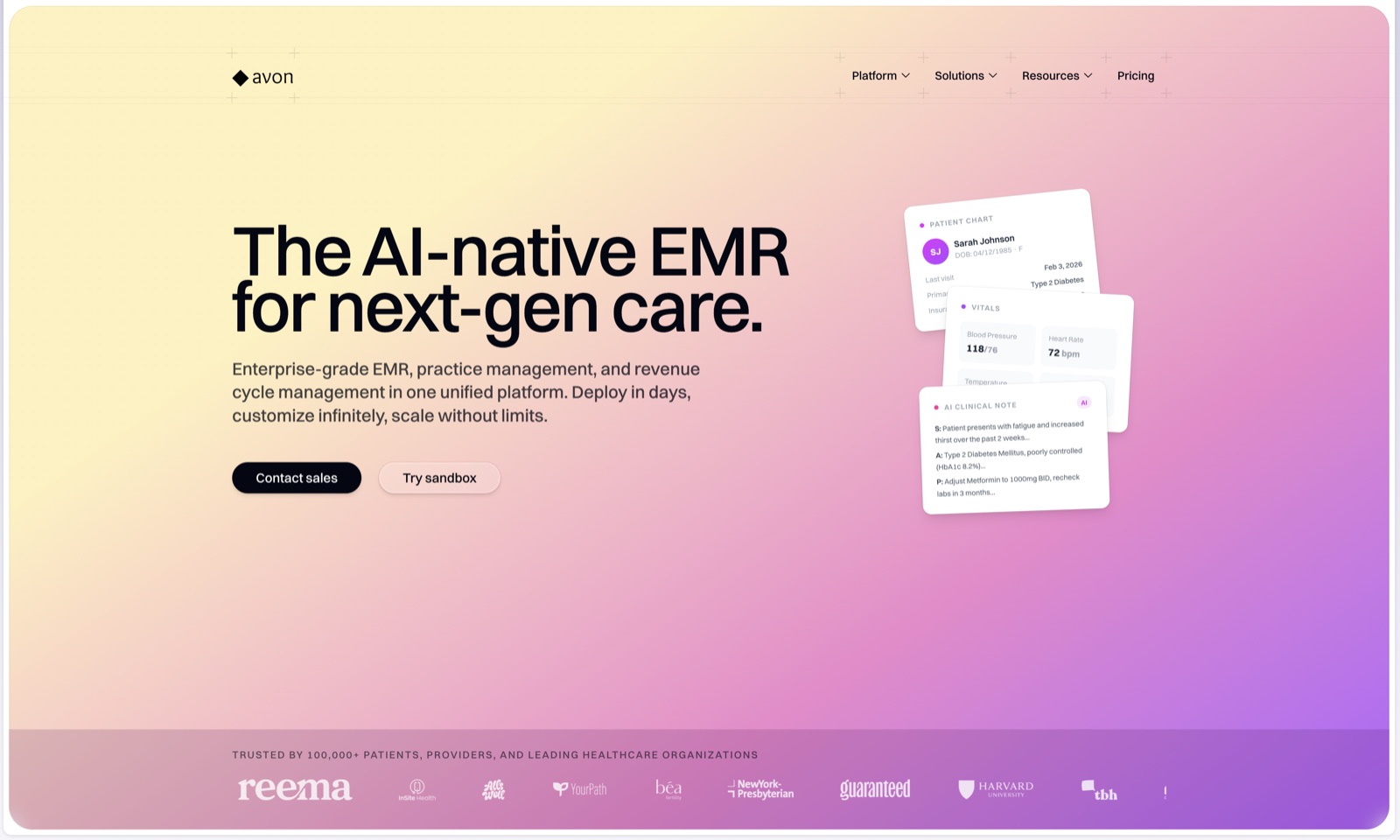
Avon Health is our first pick for growing behavioral health group practices. Against the six criteria:
- Ready out of the box — behavioral health workflows covering intake, session documentation, outcome measures, telehealth, group and family therapy, and billing are configured on day one, and onboarding takes a few days.
- Flexibility for growth — new programs, additional levels of care, new payers, and practice-specific workflows are configured by the practice itself through forms, note templates, automations, and workflows, without engineering work or a vendor request. Teams with developers reach the same surface through SDKs, webhooks, and APIs.
- Telehealth integration — Zoom, Google Meet, and Doxy.me visits are created and launched from Avon scheduling, with links carried into reminders and calendar invites and the note and claim staying in the chart, so clinicians keep the video tool they already use.
- Documentation tools — note templates and forms are configurable per program, outcome measures such as PHQ-9 and GAD-7 are sent on a cadence and scored automatically, and group and family sessions produce a separate note per participant from a single documentation pass.
- Billing and RCM — eligibility checks, claim creation and submission, and revenue cycle management run in the same platform as the chart, including the session-based and complex insurance scenarios behavioral health practices bill against.
- AI nativity — AI is part of the platform architecture rather than a feature attached to the record, so it drafts notes, writes structured data back to the chart, and acts on the workflows the practice has configured. AI agents have the same capabilities as your billing and intake staff, running against the whole chart instead of one screen at a time. For example:
- AI Scribe — sitting inside the record, the scribe reads the whole chart while it drafts, so it can nudge the provider on what they are missing while the patient is still in the room.
- AI RCM — runs eligibility, scrubs the claim against payer rules, submits it, tracks status, and posts payments, then drafts appeals for a biller to review. Coding sits at the front of that work: the system suggests ICD and CPT codes from the note and helps providers and billers maximize the documentation that supports them, so gaps surface while the note is still open.
- AI Search — search, and talk to, your patient’s chart and records. Ask anything and get a sourced answer instead of twenty minutes of digging.
Avon Health meets you where you are and grows along with you.
2. SimplePractice
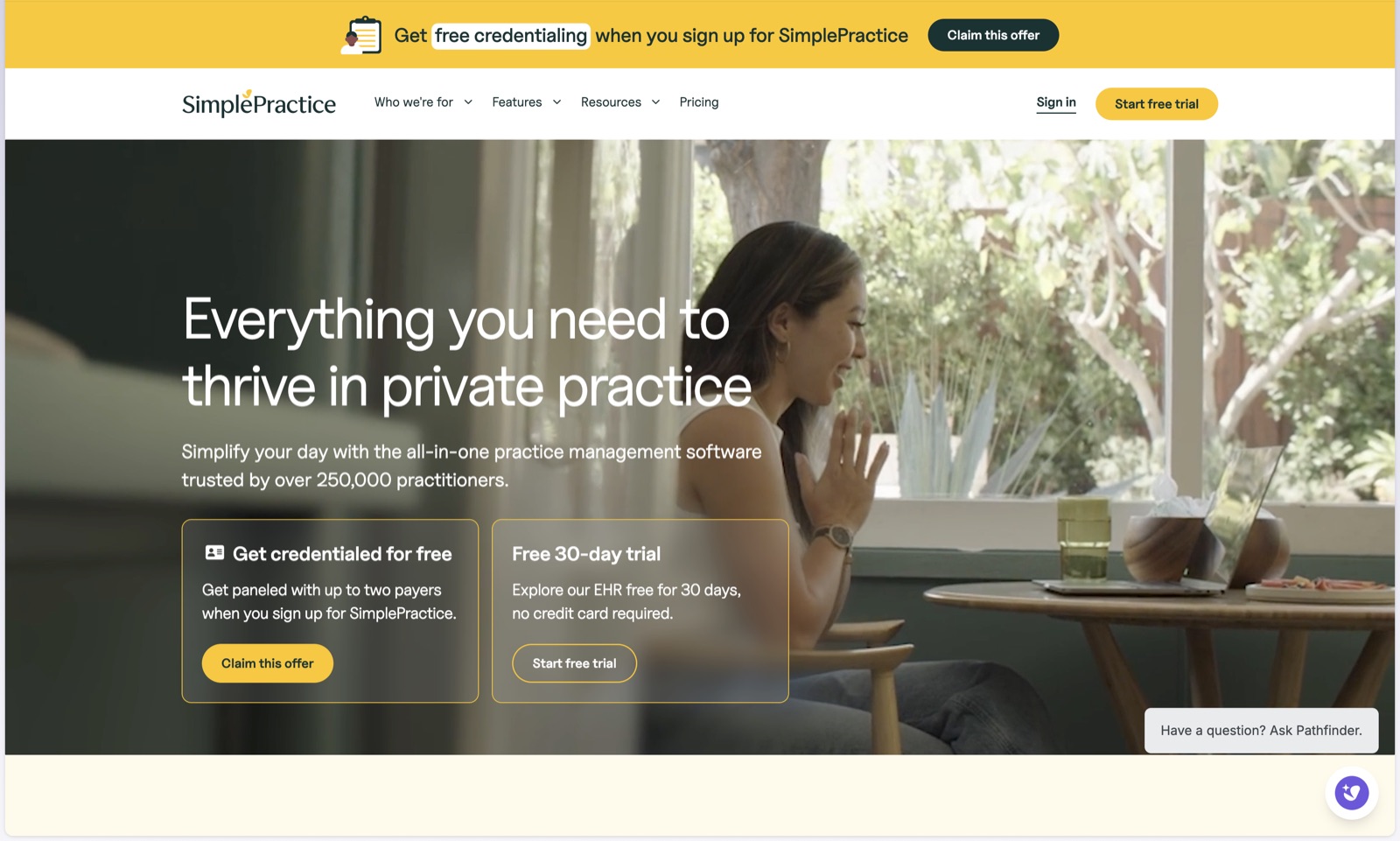
SimplePractice is a practice management platform used by solo clinicians and small behavioral health group practices. Against the six criteria:
- Ready out of the box — scheduling, documentation, telehealth, a client portal, and billing come in one subscription and are usable within days.
- Flexibility for growth — configuration stays inside built-in settings and templates, so workflows follow the structure the platform defines.
- Telehealth integration — the vendor’s own HIPAA-compliant video, with group appointments for up to 15 clients.
- Documentation tools — therapy note templates plus a library of scored measures, sent automatically ahead of appointments and recorded in the client file.
- Billing and RCM — insurance billing, claim submission, and payment handling run in-platform.
- AI nativity — AI Note Taker transcribes the session and drafts a progress note for review, as a feature alongside the record.
3. Healthie
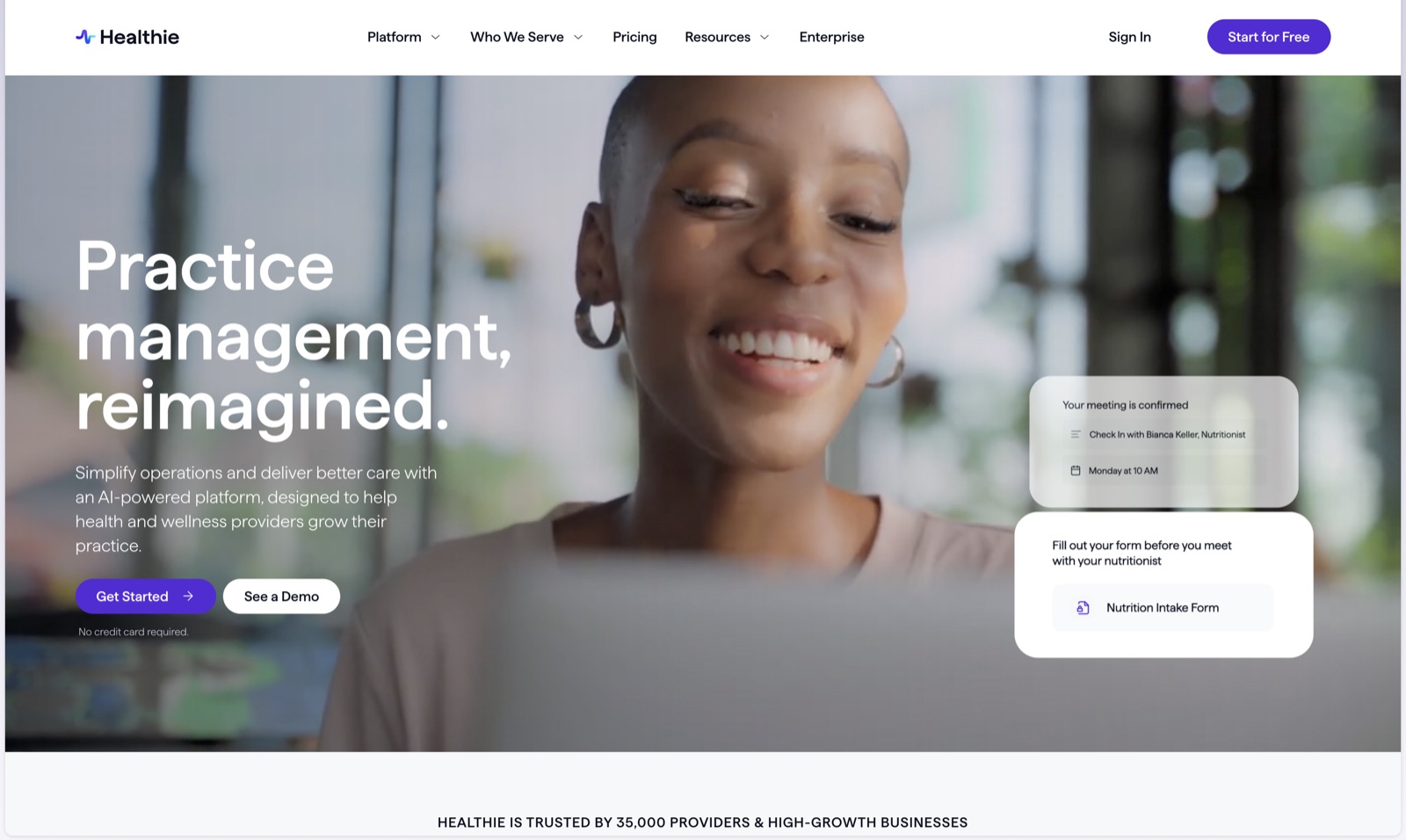
Healthie is an API-forward platform used by virtual-first and multidisciplinary care organizations. Against the six criteria:
- Ready out of the box — scheduling, charting, care plans, programs, and billing are all present, with configuration work in front of them; onboarding typically runs to weeks.
- Flexibility for growth — high for teams that have developers, through a documented API used to build custom patient experiences on top of the platform.
- Telehealth integration — the vendor’s own video, with group charting notes for couples, families, and support groups.
- Documentation tools — customizable charting templates, behavioral health note formats including a group therapy session note, and an auto-scoring forms library that covers PHQ-9 and GAD-7.
- Billing and RCM — CMS-1500 claims are created automatically once a session is marked complete, then submitted through a clearinghouse or an RCM partner such as Candid Health.
- AI nativity — AI Scribe drafts notes from the session, as a feature alongside the record.
4. Canvas Medical
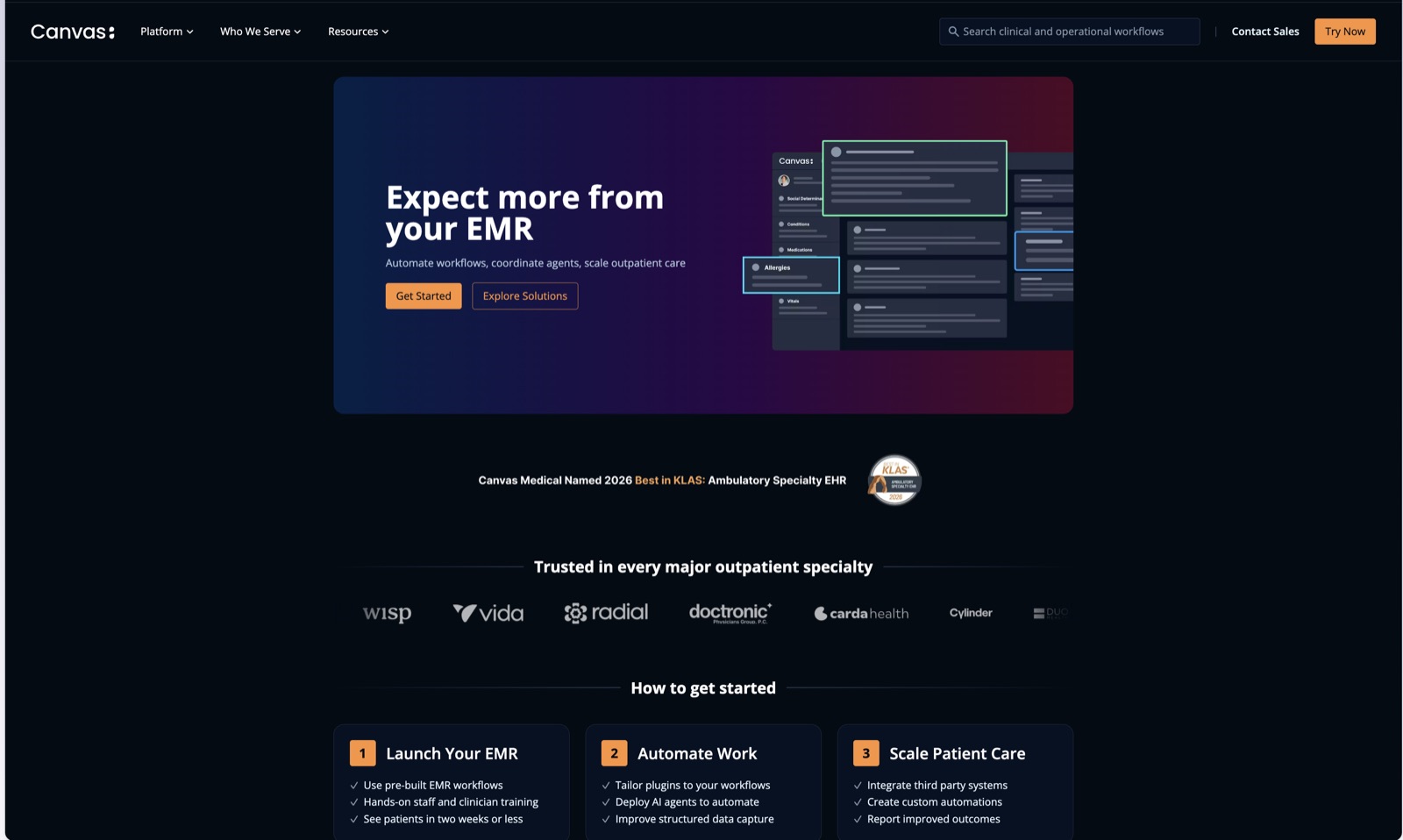
Canvas Medical is a developer-first EHR built on a FHIR-based data model. Against the six criteria:
- Ready out of the box — the platform is a framework rather than a preconfigured practice, so workflows are built before go-live and onboarding runs weeks to months.
- Flexibility for growth — the highest ceiling in this comparison, through an SDK, plugins, and a FHIR API for writing custom clinical logic directly into the record. Every change is code.
- Telehealth integration — configurable, assembled through integrations rather than delivered as one bundled video product.
- Documentation tools — narrative charting with coded templates, and behavioral health instances preloaded with questionnaires such as PHQ-9 and GAD-7, with protocols acting automatically on elevated scores.
- Billing and RCM — end to end, from shell claims generated at note signing through coding queues, batch submission, ERA posting, and reconciliation.
- AI nativity — AI plugins and agents, including ambient documentation and CPT code proposals for provider review; what the practice gets depends on what its developers build.
5. TherapyNotes
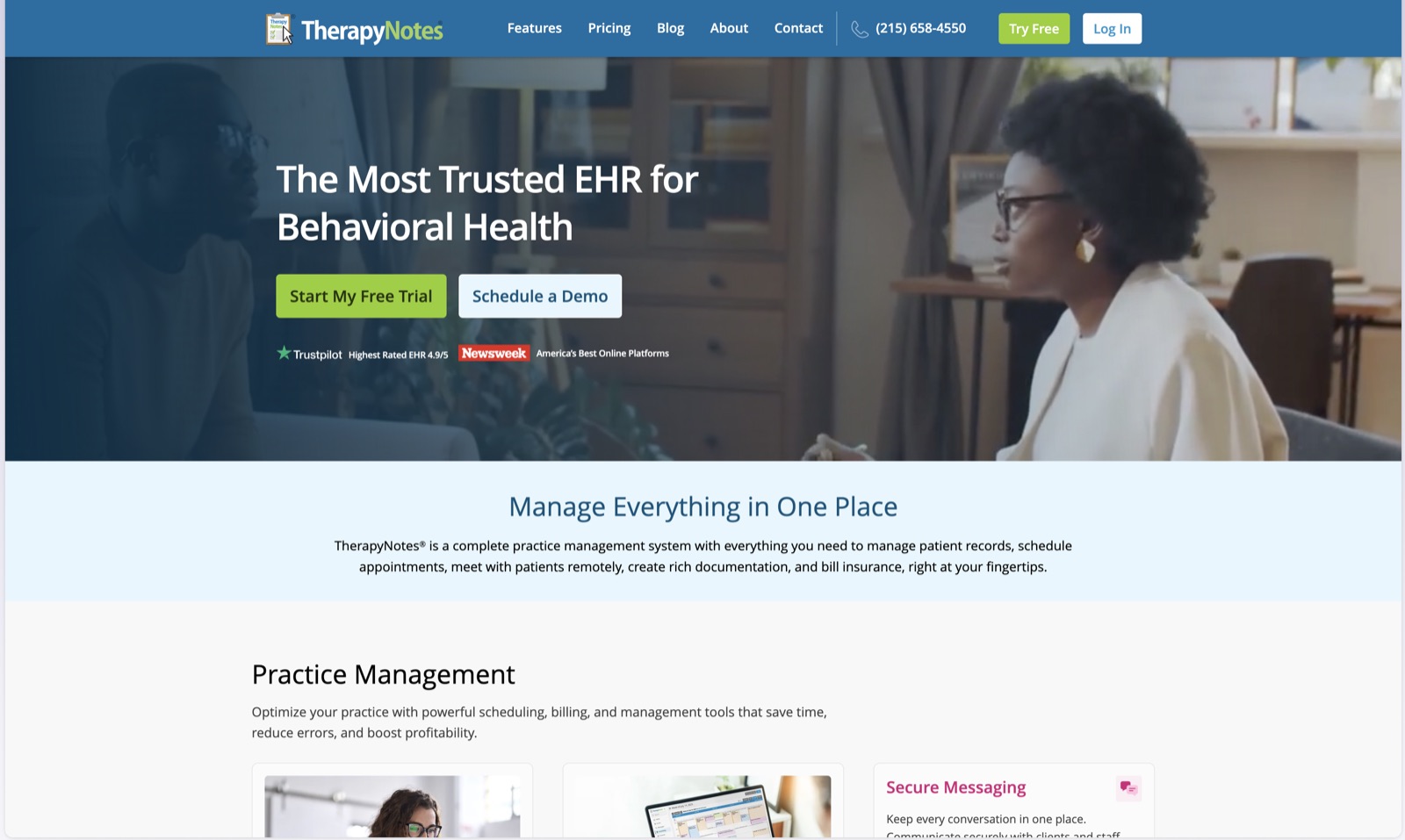
TherapyNotes is a behavioral health specific platform focused on documentation and billing. Against the six criteria:
- Ready out of the box — behavioral health documentation, scheduling, and billing are usable within days of signing up.
- Flexibility for growth — changes stay at the template level, inside a fixed platform structure.
- Telehealth integration — the vendor’s own video, supporting group therapy appointments and closed captioning on premium plans.
- Documentation tools — its strongest area: therapy-specific note formats, treatment plans, and outcome measures including PHQ-9 and GAD-7, with trend graphs in the patient chart.
- Billing and RCM — integrated claims, ERA posting, and payment processing.
- AI nativity — an ambient scribe drafts notes for individual sessions; it is not yet available for group sessions.
Topics
- Behavioral Health
- EHR
- AI Native EHR
- AI Scribe
- Group Practices
- Practice Management
- Telehealth
- Outcome Measurement
- PHQ-9
- GAD-7
- EHR Comparison